eo_logo
 
Product added to cart

Edmund Optics®

Knowledge Center

 Verified library of trusted technical resources created by our 240+ global engineers.
Filter
Laser Optics Resources (86)

An Introduction to Optical Coatings

Optical coatings are used to influence the transmission, reflection, or polarization properties of an optical component.

View Now Add to saved content

Understanding Optical Specifications

Do you want to know more about the importance of optical specifications? Learn the different types of specifications and their impact on your system at Edmund Optics.

View Now Add to saved content

All About Aspheric Lenses

Learn all about the benefits of aspheres, their unique anatomy, how they're manufactured, and how to choose the right one for your system.

View Now Add to saved content

Gaussian Beam Propagation

Many lasers are assumed to have a Gaussian profile, and understanding Gaussian beam propagation is crucial for predicting real-world performance of lasers.

View Now Add to saved content

Anti-Reflection (AR) Coatings

Anti-reflection (AR) coatings are applied to optical components to increase throughput and reduce hazards caused by back-reflections.

View Now Add to saved content

Effects of Laser Mirror Surface Flatness

View Now Add to saved content

Introduction to Polarization

Is polarization a new topic for you? Learn about key terminology, types, and more information to help you understand polarization at Edmund Optics.

View Now Add to saved content

Gaussian Beams Calculator

View Now Add to saved content

Basics of Ultrafast Lasers

Master the fundamentals of ultrafast lasers and how to choose optics that can withstand their high powers and short pulse durations.

View Now Add to saved content

Laser Beam Shaping Overview

Learn how to navigate the many available options for shaping the irradiance profile and phase of laser beams to maximize your laser system's performance.

View Now Add to saved content

Chromatically Corrected F-Theta Lenses for Ultrafast Laser Applications

Explore the key design considerations for f-theta scanning lenses and balancing dispersion in ultrafast laser systems.

View Now Add to saved content

The Unintuitive Balancing Act of Beam Expander Properties to Maximize Focused Spot Intensity

Surprisingly, intentionally clipping a laser beam going through a higher magnification beam expander can be the optimal solution.

View Now Add to saved content

Highly-Dispersive Mirrors

Ultrafast highly-dispersive mirrors are critical for pulse compression and dispersion compensation in ultrafast laser applications, improving system performance.

View Now Add to saved content

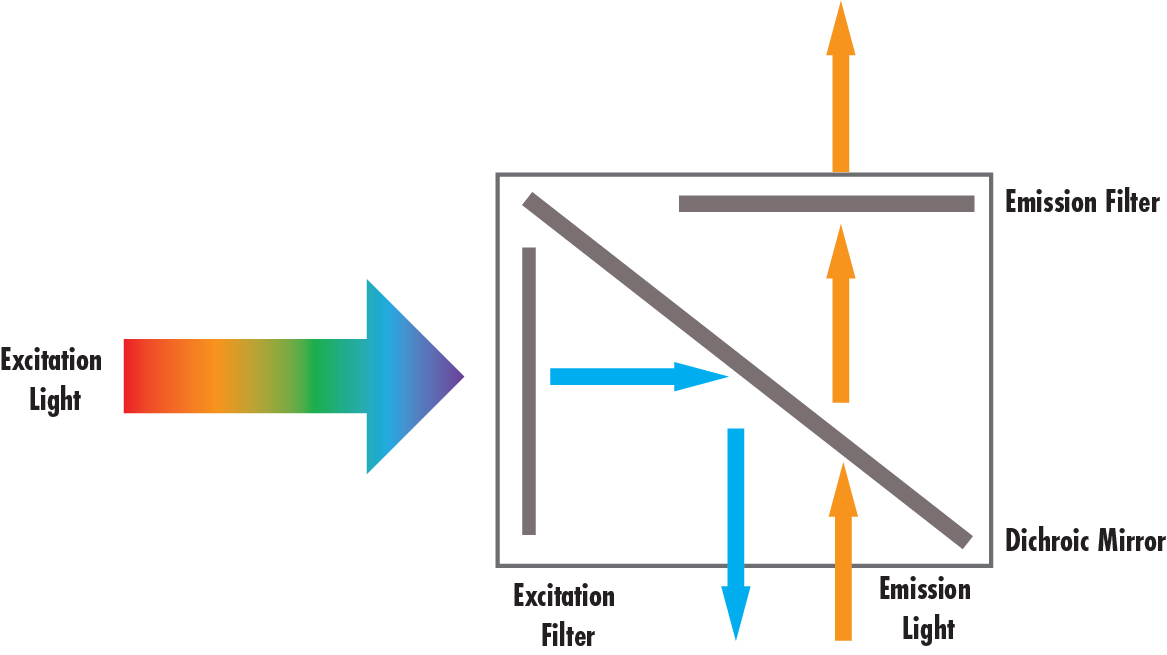
Introduction to Fluorescence Filters: Principles, Selection, and Applications

Learn how to choose the right combination of fluorescence filters for your fluorophores and optical requirements

View Now Add to saved content

Can A Beam Expander be Used in Reverse?

Beam expanders can be used in reverse to decrease a laser beam's diameter, but divergence will be increased.

View Now Add to saved content

Laser Spot Size

View Now Add to saved content

Challenges of Specifying LIDT for CW Lasers

The LIDT of continuous wave (CW) lasers is dependent on laser power, beam diameter, and other use parameters.

View Now Add to saved content

Characteristics of 2µm Lasers

Laser Optics for 2μm lasers require very specific types of materials such as fused silica and germanium. Learn more at Edmund Optics.

View Now Add to saved content

Coherent® Laser Selection Guide

Compare Coherent Laser specifications with the Edmund Optics selection guide.

View Now Add to saved content

Fundamentals of Lasers

Lasers can be used for a variety of applications. Learn how lasers work, different elements, and the differences between laser types at Edmund Optics.

View Now Add to saved content

Ultrafast Lasers – The Basic Principles of Ultrafast Coherence

Advances in laser technology have made it possible to produce pulses ranging from a few femtoseconds to tens of attoseconds. Learn more at Edmund Optics.

View Now Add to saved content

Why Laser Damage Testing is Critical for UV Laser Applications

Laser Induced Damage Threshold describes the maximum quantity of laser radiation an optic can take before damaging. Learn more at Edmund Optics.

View Now Add to saved content

Laser Damage Threshold Calculator

View Now Add to saved content

Benefits of Hard Coatings

Hard coatings provide many advantages compared to traditional soft coated optics. Learn more about the coating differences and benefits at Edmund Optics.

View Now Add to saved content

High Laser Damage AR Coatings

Laser optics high reflectivity mirrors meet exceptional specifications that Edmund Optics' competitors often fail to meet. Learn more at Edmund Optics.

View Now Add to saved content

Custom Bandpass Filter using Shortpass and Longpass Filters

Do stock filters not meet your bandwidth or CWL requirements? Learn how custom bandpass filters are created using short or longpass filters at Edmund Optics.

View Now Add to saved content

Handling and Storing High Power Laser Mirrors

Check out these best practices for handling and storing high power laser mirrors to decrease the risk of damage and increase lifetimes at Edmund Optics.

View Now Add to saved content

What are Beamsplitters?

Optical components that create two beams by splitting incident light are beamsplitters. Read more about the different types of beamsplitters at Edmund Optics.

View Now Add to saved content

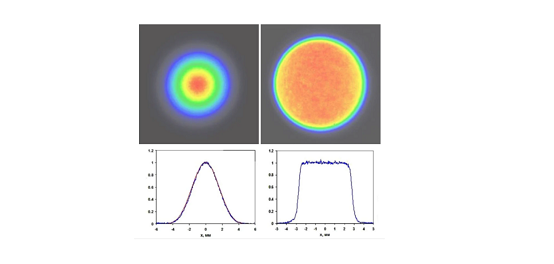
Why Use a Flat Top Laser Beam?

Converting a Gaussian laser beam profile into a flat top beam profile can have numerous benefits including minimized wasted energy and increased feature accuracy.

View Now Add to saved content

Group Delay Dispersion and White Light Interferometry

Understanding group delay dispersion (GDD) is critical for knowing how ultrafast laser pulses will be stretched or compressed.

View Now Add to saved content